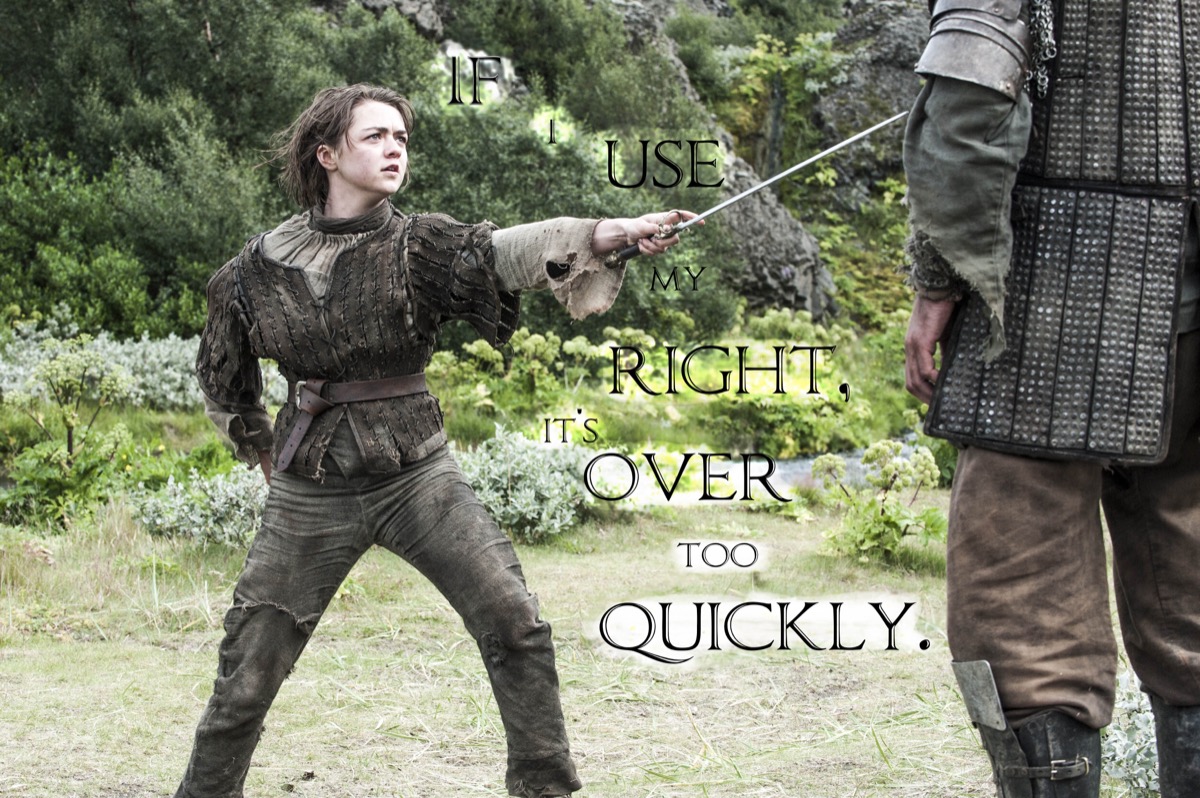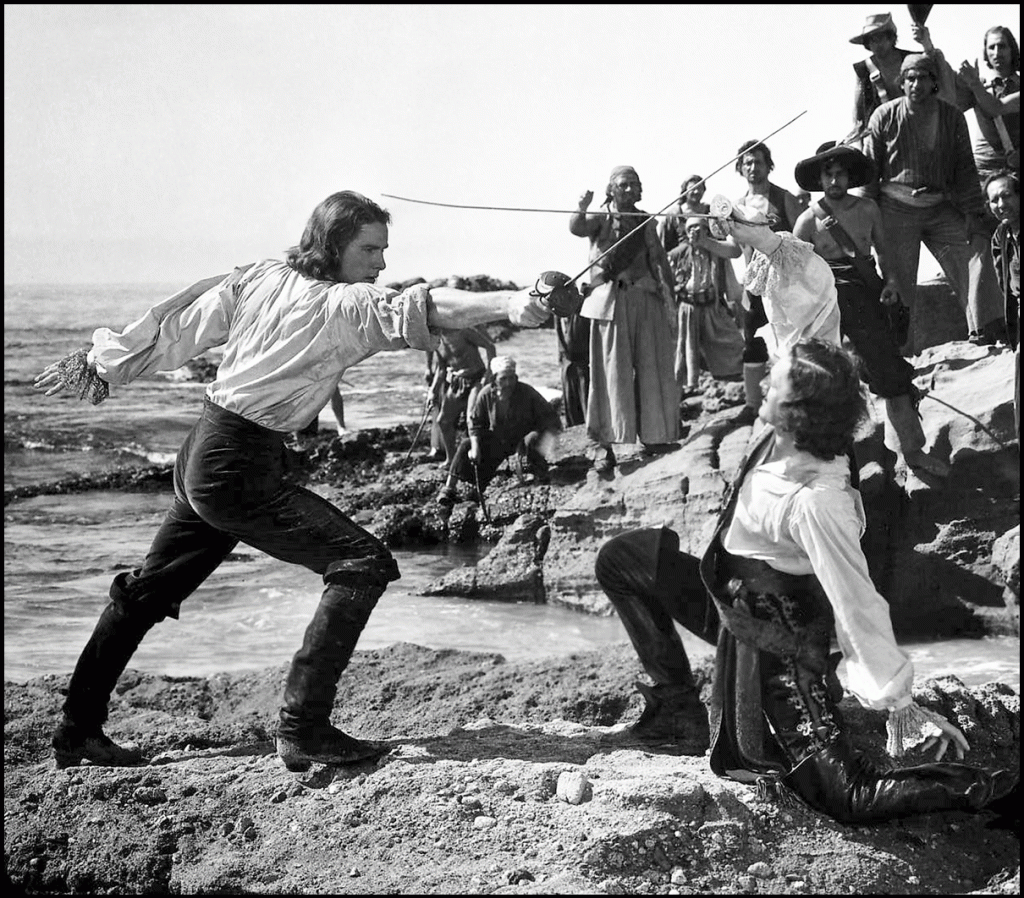
Here’s a fundamental principle that transforms how you approach stage combat: A sword fight is NOT a fight between two swords.
Without this perspective, staged fights devolve into choreographed dances rather than realistic portrayals. Two actors crossing swords repeatedly, without genuine attacking intent behind their movements, creates a performance that audiences can sense is artificial.
The Problem with Choreographed Swordplay
Watch many theatrical sword fights and you’ll see actors who appear to be aiming at each other’s blades rather than at each other. The swords meet in predictable patterns that look planned rather than desperate. The combatants seem to be cooperating rather than trying to kill each other.
This reflects an era when sword fights on film were entirely based on sport fencing, and actors were routinely trained in fencing as an approach to stage combat. While this created safe choreography, it often missed the visceral reality of combat.
The Beat Technique Done Right
Beating - striking an opponent’s blade - serves a tactical purpose: moving their weapon out of alignment to create attack opportunities. The challenge lies in executing this safely on stage while maintaining realism.
Think of it as “The Goldilocks Beat: not too heavy, not too light, just stopping at centre.” This approach ensures both safety and visual impact. A beat that’s too heavy risks injury; too light and it lacks dramatic effect.
For choreographers, if beats are done well and make sense tactically, they enrich the choreography with strategic moves. It’s actually more realistic to have attacks on the blade than not - real fighters constantly seek to control their opponent’s weapon.
The Parrying Myth
There’s a misconception that a stronger attack will destroy a parry, or that pushing against a parry is effective. Consider: how slow and ponderous would every fight be if that were actually a viable strategy in real sword fighting?
Skilled fighters abandon blocked attacks immediately. When their sword meets resistance, they redirect to an open target rather than trying to power through. Speed and precision matter far more than strength.
Practical Advice
Don’t focus on strength - focus on speed and precision. This fulfills both needs of stage combat: it’s safer for actors, and it’s also more realistic for actual sword fights.
Remember: you’re not fighting the other sword. You’re two people trying to survive a lethal encounter. Every action should reflect that desperate reality, even in a choreographed performance.
About the Author
David McCormick
Head of Stage Combat
David serves as Head of Stage Combat at Academie Duello and holds Fight Directors Canada certification. He specializes in theatrical sword fighting and period-accurate combat choreography.