The longsword is a powerful piece of historical weaponry. Its mystique has captured our attention for hundreds of years and is consistently prevalent in both ancient texts and today’s pop culture.
A typical training longsword is steel, between 40 and 50 inches in total length, and can take up some serious space when you swing it. As much as we would all love to have space in our home where we can swing a beautiful beast like this, most of us would probably end up damaging our furniture—or housemates! But fret not, you can make a shorter training version of a longsword quite easily and inexpensively by following a few simple steps.
HOW TO MAKE IT?
STEP 1: Gather Materials
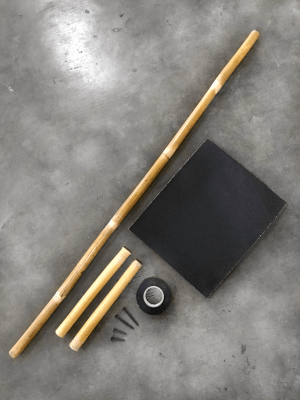
These are the materials needed in this project:
- 1pc 3ft Wooden Dowel (1-inch diameter)
- 2pcs 9-inch Wooden Dowel (1-inch diameter)
- 1pc Sandpaper (40-100 grit)
- 1 roll Grip Tape / Utility Rope
- 2-4pcs 1-inch Nails / Screws
- 1-4pcs Rubber Chair Leg Caps / Rubber Cane Caps (Optional)
Work with what you have, improve what you can. For the wooden dowels, in this case rattan sticks were more available, but any wooden dowel will do such as softwood dowels you’d find in a typical hardware store. Note that if you use a harder type of wood, you might need more appropriate tools to cut or sand it especially if you cannot get a couple of short dowels for the crossguard.
STEP 2: Craft Crossguard
Measure Groove
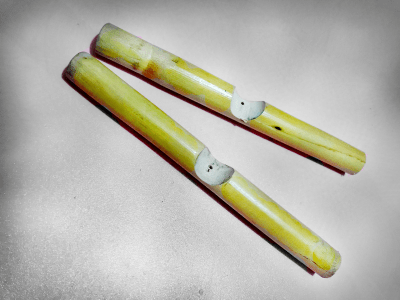
- Mark a one-inch gap in the middle of the 9-inch dowels. This is where the 3ft dowel for the blade and handle will go.
Sand Groove
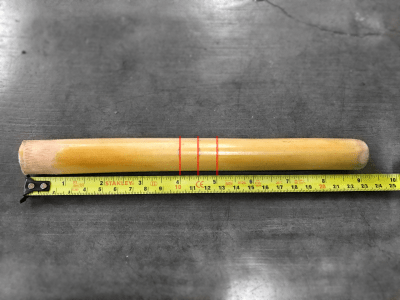
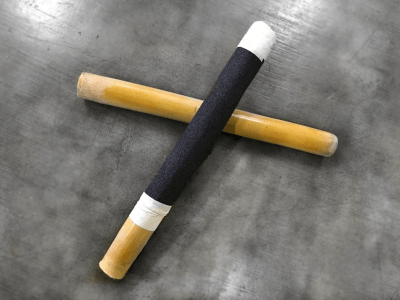
- Using either the other 9-inch dowel or the 3ft one, attach the sandpaper to it and sand down one side of the marked area on the 9-inch dowels. Continue until you reach the center of the dowel. By using a dowel as a handle for the sandpaper, you get the exact shape that will fit perfectly when attached to the blade/handle. This step may take a while, so I suggest that you use this time to play some sword fighting videos in the background while working or even watching some lesson videos on DuelloTV.
STEP 3: Attach Parts
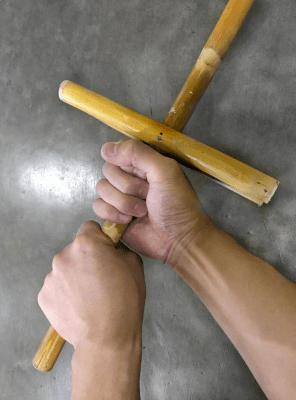
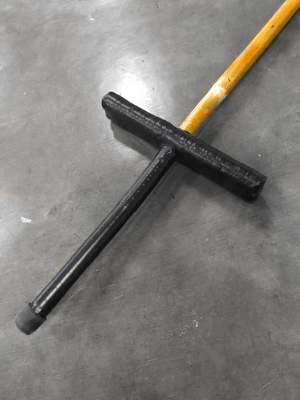
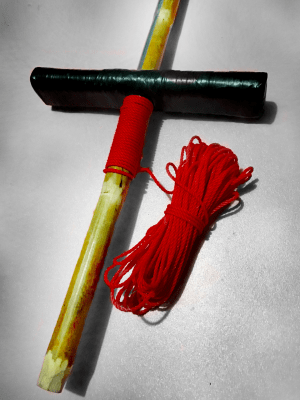
Measure Handle
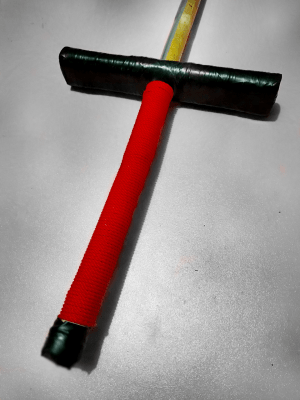
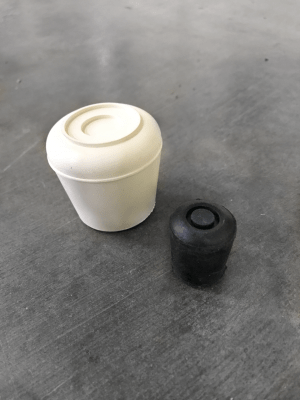
- A longsword handle is usually around 6-11 inches. Make sure you have enough space on your handle for a two-handed grip. Having space between the hands is also recommended.
Attach Crossguard
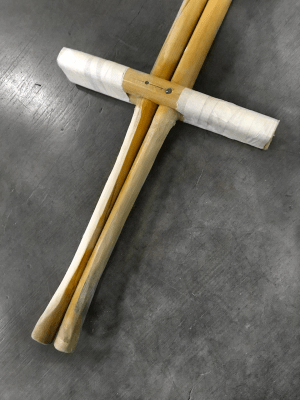
- Sandwich the 3ft dowel in between the two 9-inch dowels to form the crossguard. Nail/Screw the dowels together in the center and the ends of the crossguard for extra security.
Attach Grip Tape on the Handle
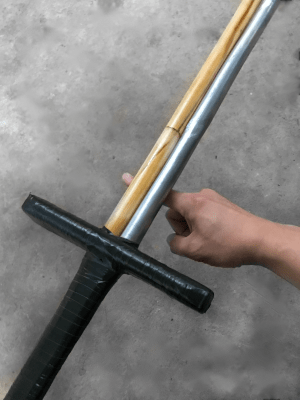
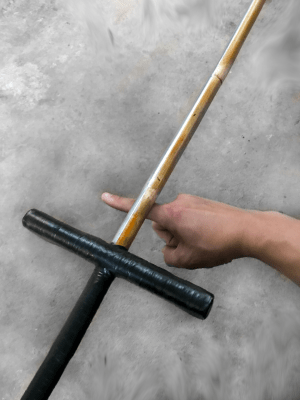
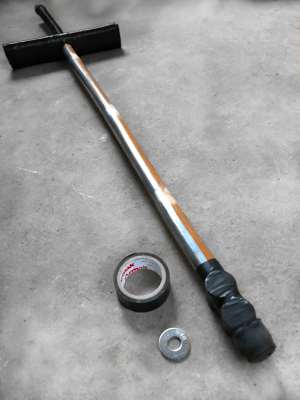
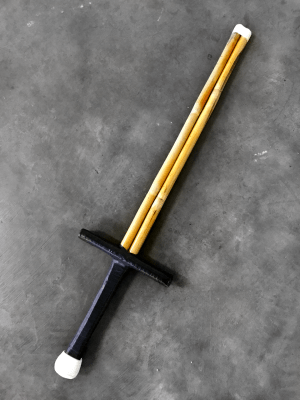
- At this point, your sword should be pretty much good to go. But going the extra mile and wrapping the handle/crossguard in grip tape makes the finished product a lot nicer and easier to swing around.
- You can also try using utility rope and wrap it around the handle. It’s a little more work compared to grip tape but some people prefer this since tape sometimes easily gets weathered.
STEP 4: Make it look nice
Add Rubber Blunt/s
- By adding a rubber table leg end or a cane end to the bottom of the handle, you can create a pommel. Add a matching blunt to the tip to put a little weight ahead of your hands and protect the wood from splintering.
Mark the Edges
- Use tape or paint to clearly show the edges and flats of the blade. The front and back edges align with the crossbar.
STEP 5: Start Swinging
The only thing left to do now is trying out your new indoor training longsword! Now find a nice spot and go attend some of Academie Duello’s online classes.
You also have the option to make a different version of the indoor training longsword by adding a second piece of 3ft wooden dowel and modifying a few of the steps:
Get a second wooden dowel for the blade/handle
- By getting a second 3ft dowel, not only does it make it easier for you to identify the front/back edge of the blade, but the weight simulation is a lot closer to a steel longsword which is usually at around 1-1.5kg.
Sand two grooves on the crossguard
- Since you will be sandwiching two dowels now, you also need two grooves on the crossguard to make it fit perfectly.
Sand the handle
- Holding two dowels on the handle might feel a bit chunky. To fix this, sand down the sides of the dowel until you get the grip to fit perfectly in your two hands. Sanding the handle also transfers more weight on the tip making the sword more forward-weighted.
Some extra tips:
Weightedness
- The average longsword weighs around 1-1.5kg. The second version of training longsword shown is at 1kg. By adding some small things such as a different grip on the handle, modifying the pommel, or adding weight on the blade, this can easily tweak the weight of the sword.
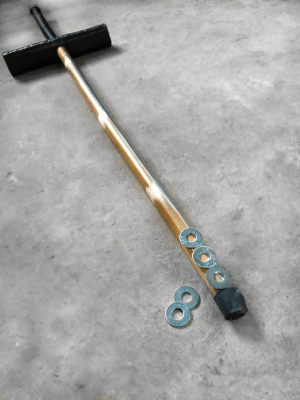
- By taping a few washers towards the tip of your indoor trainer, you can gradually play with its point of balance making it more forward weighted and change its overall weight.
Point of balance
- You can find the point of balance on a sword by placing one finger on the flat of the blade and seeing where you can most easily balance the sword. For a proper combat longsword or a historically accurate longsword, it is usually at around 2-3 inches up the blade from the crossguard.

About the Author
Quintin Tanseco
Adventure Guide
Quintin brings infectious enthusiasm to every adventure session, specializing in axe throwing and archery instruction.