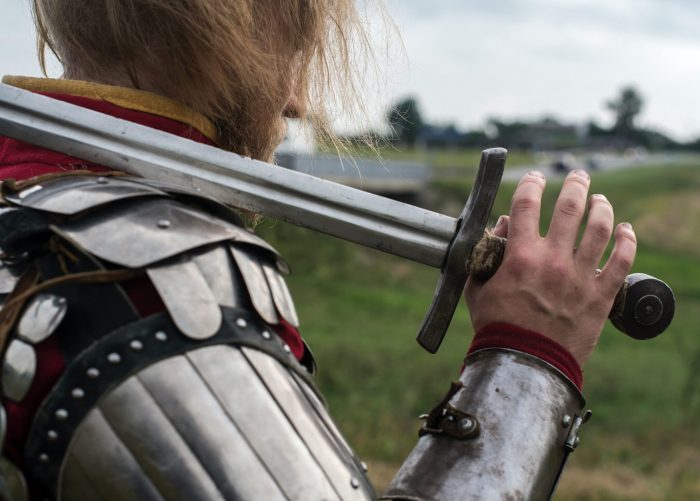
Understanding guard positions is fundamental to effective swordplay. Each guard offers different advantages for attack, defense, and the transitions between them. Here’s an overview of the six core guards of the sidesword and their tactical applications.
High Guards
Guardia Alta (High Outside)
This high guard on your dominant side excels at delivering powerful overhead strikes and offers versatility for deflecting incoming cuts from multiple angles. It’s a commanding position that naturally invites your opponent to attack low.
Sopra Bracia (High Inside)
Positioned on your inside line, this guard suits roversi (reverse cut) techniques particularly well. While slightly more specialized than guardia alta, it provides excellent coverage of your inside line while preparing powerful descending attacks.
Low Guards
Coda Longa e Larga (Long Tail, Wide - Low Outside)
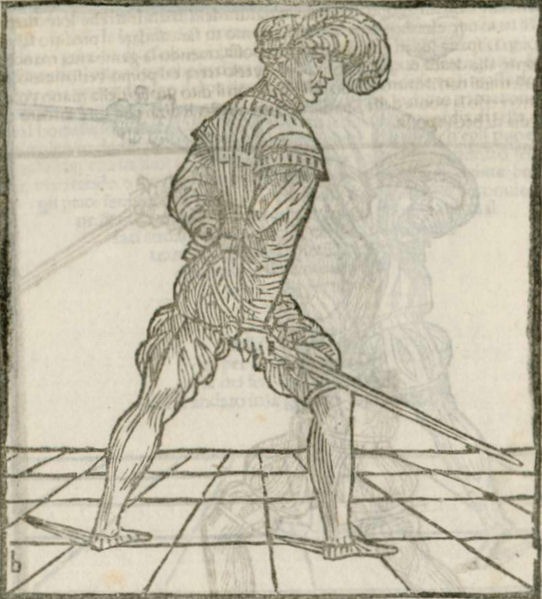
This low outside guard provides invitations, parries, deflections, and counterattacks. The wide position opens your high line as an invitation while keeping your blade ready to collect incoming attacks and redirect them into a thrust.
Dente al Cinghiara Larga (Boar’s Tooth, Wide - Low Inside)
The low inside guard benefits particularly from false-edge deflections due to the natural positioning of your arm. The blade position allows for quick rising cuts while still protecting your lower openings.
Stretta (Narrow) Guards
Coda Longa e Stretta (Long Tail, Narrow)
In this position, the blade is already aligned with your target, making thrusts your primary attack option. Despite this offensive orientation, you maintain quick parry availability when needed.
Dente al Cinghiara Stretta (Boar’s Tooth, Narrow)
Like its counterpart, this narrow guard positions your point toward the opponent. The stretta guards sacrifice some of the defensive coverage of the wide guards in exchange for a more immediate threat to your adversary.
Tactical Considerations
Each guard represents a different balance of offense and defense. High guards threaten powerful descending cuts but leave your lower body more exposed. Low guards invite attacks to your upper body while preparing rising counterattacks or thrusts.
The narrow guards present an immediate threat to your opponent but reduce your defensive coverage. The wide guards offer better protection but require more movement to launch attacks.
Mastering when to use each guard - and how to transition smoothly between them - is essential to becoming an effective sidesword fencer.

About the Author
Jennifer Landels
Mounted Combat Instructor
Jennifer is a mounted combat instructor and historical researcher specializing in medieval weapons and horsemanship. She brings academic rigor and practical experience to her writing.