
Sidesword
The military cut-and-thrust sword of the Renaissance
The sidesword—known in Italian as "spada da lato"—was the military sword of the Renaissance. Heavier and more versatile than the rapier, it excels at both cutting and thrusting, making it equally effective on the battlefield and in civilian encounters.
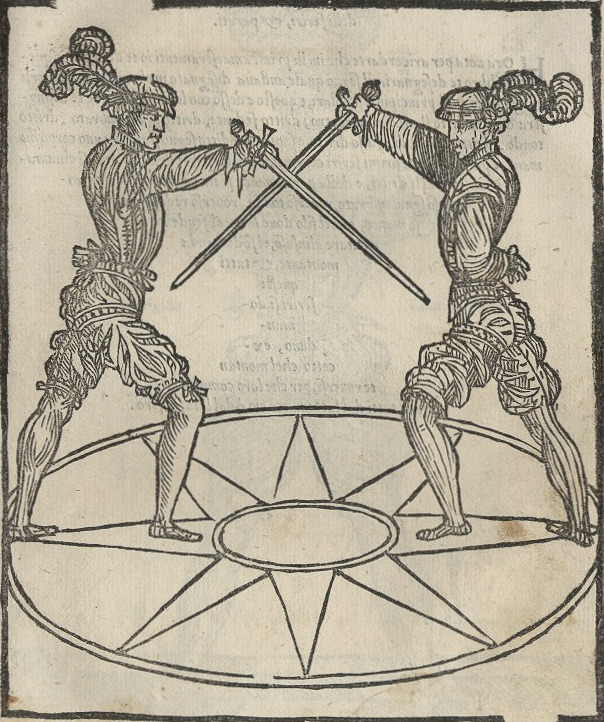
Anatomy of the Weapon
A balanced blade for cut and thrust
The sidesword sits between the medieval arming sword and the civilian rapier. Its blade is wider and more robust than a rapier's, designed for powerful cuts while retaining an effective point for thrusting.
The hilt evolved from simple cross-guards to include finger rings and side rings for protection. This development eventually led to the complex swept hilts of the rapier, but the sidesword retained its cutting-focused blade geometry.
Blade length typically ranges from 85 to 100 centimeters, with enough width to deliver devastating cuts while remaining nimble for point work. The weapon weighs between 1 and 1.3 kilograms.
Key Components
- Blade: Wide, double-edged for both cut and thrust
- Finger Rings: Protect the index finger wrapped over the guard
- Side Rings: Additional hand protection against sliding attacks
- Quillons: Straight or curved cross-guard
- Pommel: Typically round or pear-shaped for balance
Nature of the Art
The complete Renaissance sword art
Sidesword combat represents the transitional period between medieval and Renaissance swordplay. It combines the powerful cuts of earlier traditions with the emerging science of thrust-based fencing.
Powerful Cuts
The wider blade delivers devastating cutting attacks, drawing from earlier knightly traditions.
Companion Weapons
Often paired with buckler, dagger, cloak, or rotella for a complete defensive system.
Close Quarters
Grappling and disarms integrate naturally when combat closes to wrestling distance.
The sidesword is typically taught with companion weapons. The buckler (small shield), dagger, and cloak each add different tactical dimensions. This variety makes sidesword one of our most diverse disciplines.
History
The soldier's and gentleman's sword
The sidesword emerged in the late 15th century as Italian swordsmiths began developing more sophisticated hilts for military swords. The name "spada da lato" refers to how the sword was worn at the side, distinguishing it from larger battlefield weapons.
Italian masters like Achille Marozzo and Antonio Manciolino wrote extensively on sidesword technique in the early 16th century. Their works, part of the Bolognese tradition, teach an aggressive style emphasizing powerful cuts combined with tactical footwork.
At Academie Duello, we study the sidesword primarily through the Bolognese tradition, with particular focus on sword and buckler, sword and dagger, and sword and rotella (round shield) combinations.
Our Primary Sources
Achille Marozzo
Opera Nova (1536)
Comprehensive Bolognese treatise covering sidesword with various companion weapons.
Antonio Manciolino
Opera Nova (1531)
Practical guide to sidesword combat from the Bolognese school.
Train in Sidesword
Sidesword is studied as part of our Mastery program. Begin with a free trial class or explore our beginner courses.